Anton Maliauski Anton Maliauski

Tags / Human

RSS


June 1, 2026

It’s interesting how photography makes you notice things that help you look at other areas of life as well. And perhaps it’s not only photography that works this way. Any practice you truly focus on can reveal something larger. Not only inside the practice itself, but around it too.

I’m thinking now about dark photography. About an image where the details are almost indistinguishable. Where the play of light and shadow is not so obvious. Where there are no strong jumps in brightness, no familiar contrast, no immediately readable picture. And this photograph is not necessarily made this way on purpose. Sometimes it is simply an image in a dark key. A photograph taken at night.
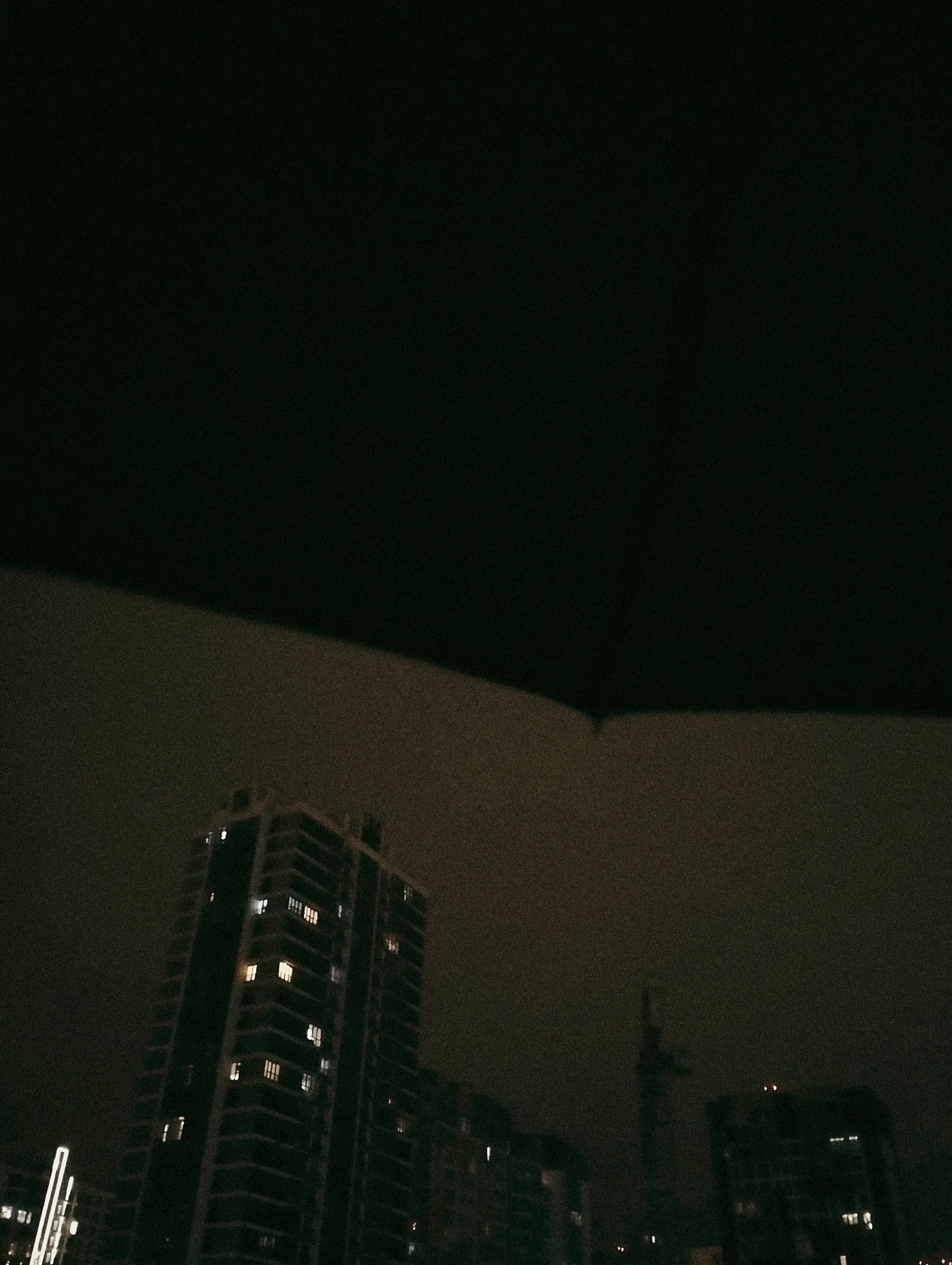
Night cityscape with high-rise buildings and an umbrella in the foreground. Dark sky, visible lights.

At night, our attention works differently. We look at light differently. We become more sensitive to faint details, to barely visible transitions, to small patches of brightness. We do not need as much light as we do during the day to make out form, shadow, presence.

But the most interesting thing does not happen when you look at such a photograph at night. The most interesting thing begins during the day. You open the image in daylight, and suddenly there is just a dark rectangle in front of you. What was full of details at night becomes empty during the day. Not because the details are not there, but because you are no longer looking from the same state.

And if we look at this more broadly, something similar happens in life. We can also fail to see certain moments because we are looking at them from the wrong state. Not in the right light. Not in the right inner time. What was once full of meaning can later seem like just a dark spot. We look and do not understand what was there. We do not make out the details. We do not feel the depth. We pass by something that was once alive.

To see such a photograph, you almost have to return to the state in which it was made. To look at it in a different light. At a different time of day. And if we are speaking about life, in a different mood, in a different silence, with a different kind of attention.

Sometimes, to see something, you do not need to add more brightness. Sometimes you simply need to enter the darkness again.
I’m realizing more and more how alien LinkedIn feels to me.

Not just uninteresting. Not just inconvenient. Alien in its very structure. It is a space of corporate busyness, robotic politeness, and constant self-packaging. There, a person seems to turn themselves in advance into a job description, a career signal, a neat professional silhouette.

And at some point I realized: I don’t want to be there even formally.

A good professional is not made of competencies alone. They are made of taste, character, attentiveness, experience, strangeness, pain, curiosity, mistakes, pauses, inner fire.

And LinkedIn seems to say:

“No, no. Leave only the title, the case study, the achievement, the team thank-you, and five bullet points about leadership.”

Not a person. A profile.

P.S. Symbolic how it turned out: May 1.

September 10, 2025
Favourite
From series Robot vs human
  1. Manifesto of the Intersection of Worlds

We live at the junction of two systems: bodies have biorhythms and breath; servers have timestamps and uptime. The intersection of worlds is not a compromise but an interface, a place where human attention meets machine protocol. It is important to be fluent in the language of feeling and the language of systems. Silence is not a pause but a medium; the algorithm is not a judge but a tool. Meaning is a signal that passes through noise without losing the human dimension.

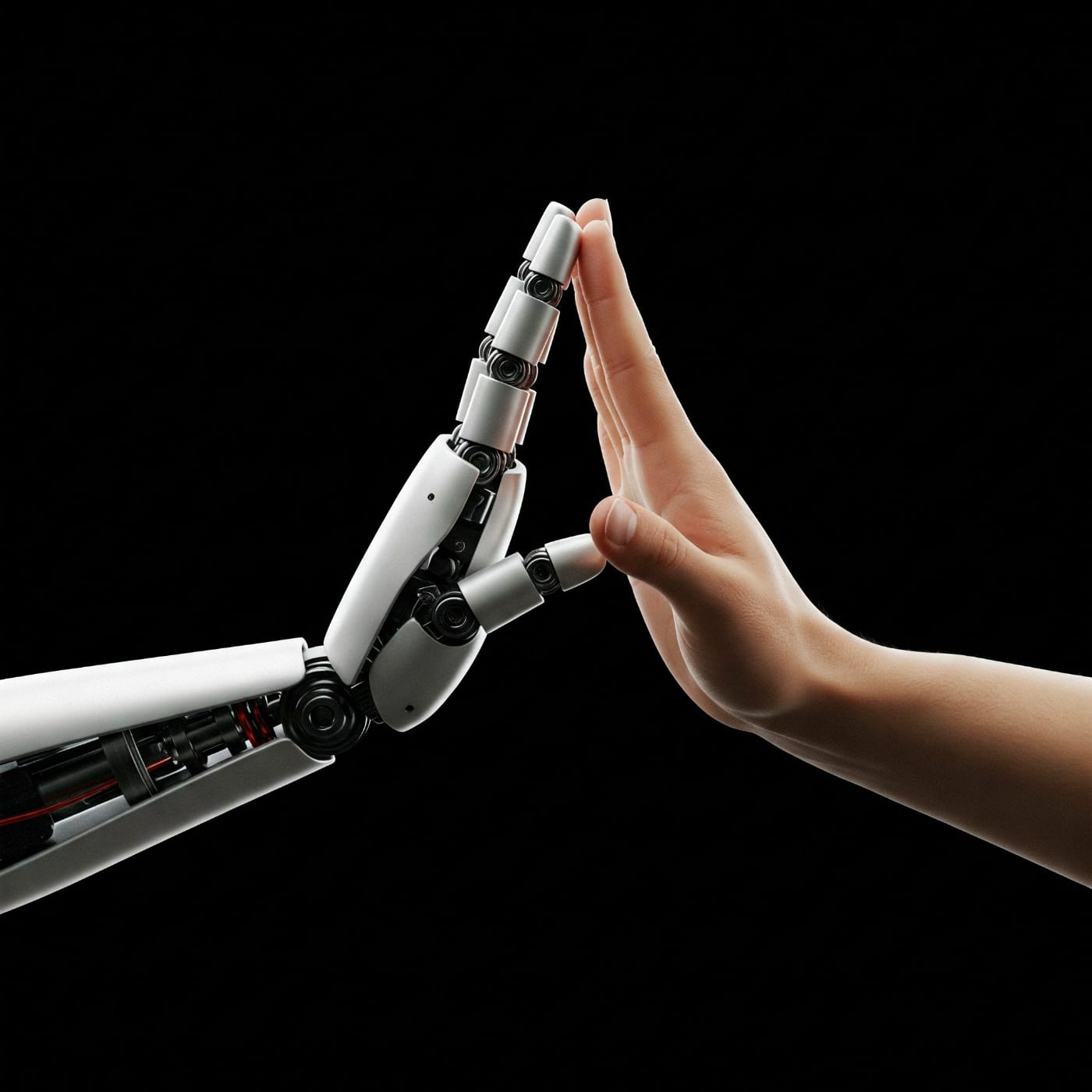
A robot’s palm touches a human palm on a black background

Design not for retention but for free will. Choose depth over reach. Recognize friction as part of the protocol, not a bug. Mark boundaries and sources, especially when AI is involved. Transparency is the new ethical minimum. Build small protocols that return agency: rituals of attention, careful maps instead of total pictures of the world. Publish not “truth forever” but careful diffs, checkpoints in the evolution of thought.

The intersection of worlds is a place where the system can be rebooted. Here we fix the initial conditions: first the body, then the tool; first reality, then the model. Between heart and circuit, between voice and code, the protocol preserves the full spectrum of the signal, including feeling.

January 21, 2025
Favourite

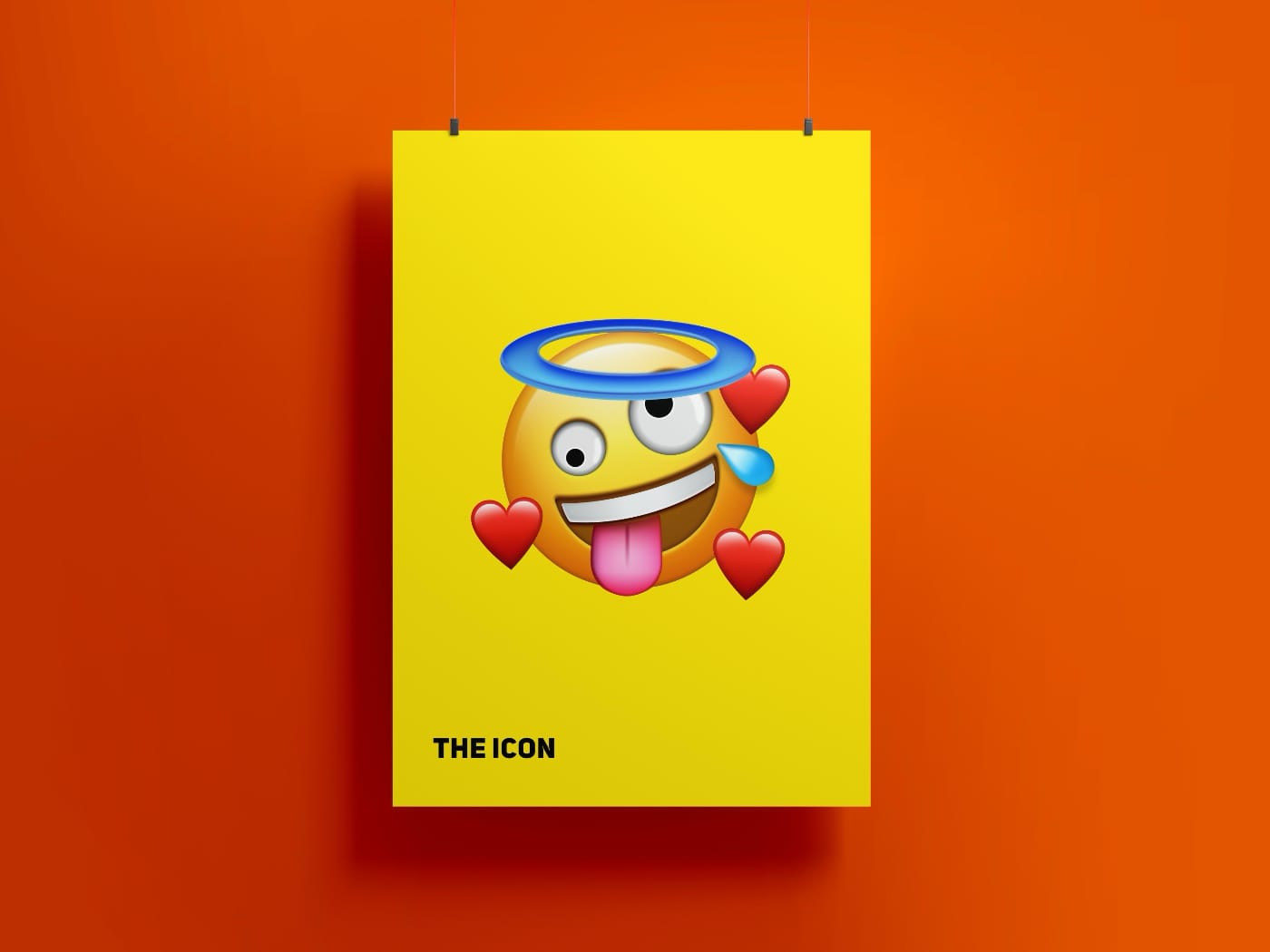
Remade the poster “Icon of This Age”. The new version is simpler.

THE ICON — An icon of our time
An icon of our time

The other day I voiced my short film “Sunset (I know it will happen again)”. It was very important to me that the voice sounded natural. I did several takes1 - where I feel relaxed, there are always rough edges and mistakes - here you can’t hear a letter, there the accent is wrong. It seems simple - try and everything will be great, but then the soul is lost and I hear artificiality. There are projects where this is not so important, but here it was extremely important, and I am my own strictest director.

This makes you think about the fact that the present is imperfect. Expressing yourself honestly may lead to dissatisfaction with the result, since it is human nature to make mistakes.

October 17, 2024
Favourite

I made a short film based on my poem. This work is very important to me because I aimed to convey as accurately as possible the feelings I experienced this year. Made with love.

00:00:01:06
00:00:01:06
00:00:11:00
00:00:11:00
00:00:25:08
00:00:25:08
00:00:30:10
00:00:30:10
00:00:32:18
00:00:32:18
00:00:38:02
00:00:38:02

October 16, 2024
From series At the minimum
  1. Look at the candle flame

Since ancient times, people have tried to illuminate their lives as much as possible, because darkness is frightening and arouses exploratory and conquering interest. But today this leads to light pollution 1 of cities. And if we understand light not literally, then it is the desire to “illuminate” as much as possible around us - more information, more “useful” surfaces and screens, more contacts with people per unit of time. Sounds good, but it has a terrible effect on us every day - defocus, laziness and loss of interest, because there is so much around us right now.

You need to be able to turn off everything for yourself, and then gradually return only what is truly significant. Here is your true interest right now and nothing else exists at all - the candle flame. At this moment, the surrounding emptiness creates space for perception of the most important thing. After a while, when your eyes get used to it, you begin to distinguish the details of the space, you will see more context, more colors. The space will acquire more meaning, because it surrounds the object of your interest now.

For example, you are sitting opposite another person. You are calmly communicating. Pay attention only to this moment. Turn off and remove your smartphone from the table. Instead of a noisy and crowded cafe, sit on a bench in the evening park or in the kitchen with a cup of tea. The person opposite you is a candle flame - only its light is important now, only it illuminates the space.

This can be applied to the project you are working on, to information, to rest. It is not for nothing that people prefer a paper book instead of a digital one - nothing should distract attention, including the medium.

Only the candle flame reflected in your pupils.

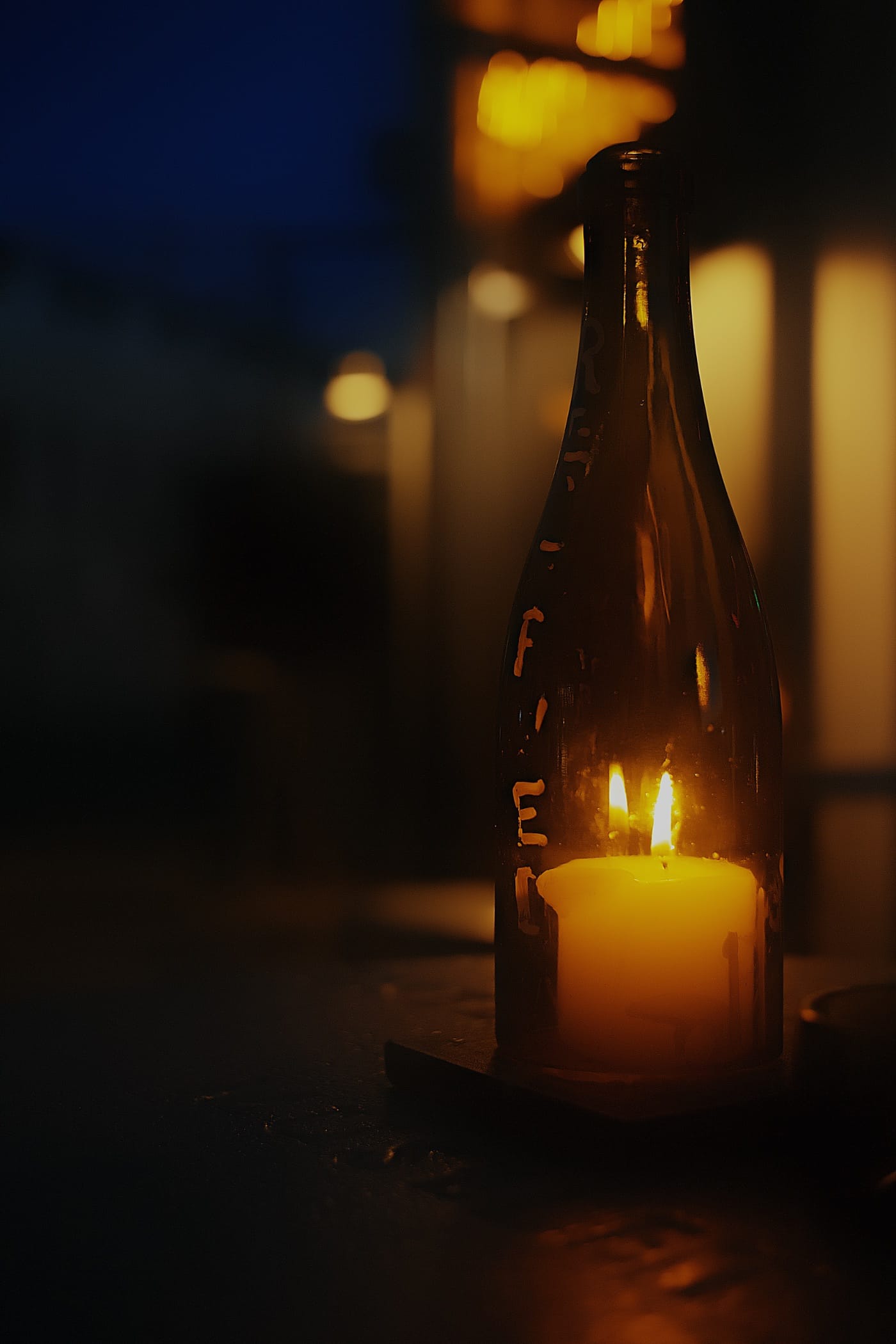
A candle in the night city. Only a candle flame
From series Document your life
  1. Photography and poetry: reflection of the external and internal

Photography is an opportunity to capture a moment as I see it. A reflection of the external. I am only an observer.

Poetry is an opportunity to capture thoughts and feelings so that they do not scatter across a sheet of paper. A reflection of the internal. Again, I am only an observer.

There is one goal. My guiding star.

September 26, 2024
From series Document your life
  1. Sparks from the past

I have already written about “breadcrumbs” on the way, which help us remember who we are and why we ended up here. But I liked another description of captured moments - sparks. Feelings are like sparks. Sparks from the past that “ignite” you today.

If “breadcrumbs” sounds a bit boring and has little connection with the emotionality of the moment, then the word “spark” lights up. In my opinion, the comparison of emotional moments with sparks is very apt.

Here’s what Winnie Lim writes:

I would not be re-reading these posts if not for dayone or timehop, and re-reading them lights up something in me, especially if I am in a period of existential slump, which occurs more often than I would like. Sometimes I forget I can be capable of writing in more dimensions than my usual stream of consciousness. I could reduce the time I spend in existential slumps if I could access these little sparks of my old selves in a more timely and accessible manner.

In another note I compared to flame:

Of course, I don’t think that the reader will immediately shed tears after reading my quote from an article from a year ago. No! First of all, I want to shed tears or laugh myself. This old note becomes part of a new product (note, article, book, podcast, film) and brings a piece of that energy here. This can be compared to a torch that I brought to light a new fire.

From series Document your life
  1. The Delusion of Looking at Yourself of Yesterday

Sometimes, looking at myself yesterday, I want to urgently change something in myself today. I read a note from two years ago and the first thought is “What kind of stupidity am I saying?” The second thought is “Why am I saying it this way and not that way?”.

But why does this happen?

We perceive ourselves as unchanged, although we are changing right this second. Change is a continuous process. Everything around us changes. We change too. I am today - not me yesterday1. Looking at myself yesterday and “clutching my head”, you need to be glad that something has changed.

« Earlier
Later »