
A Poster on a Digital Surface
I noticed that this poster behaves in a very interesting way on a smartphone screen.
On a sunny day, I can barely see the text on it. To see it, you have to get the angle right. Point the screen straight at the sun, wait for the light sensor to kick in and for the screen to light up at maximum brightness. Only then does the barely discernible text begin to appear. Of course, this works if auto-brightness is enabled. Indoors or at night, on the other hand, the text becomes much more visible.
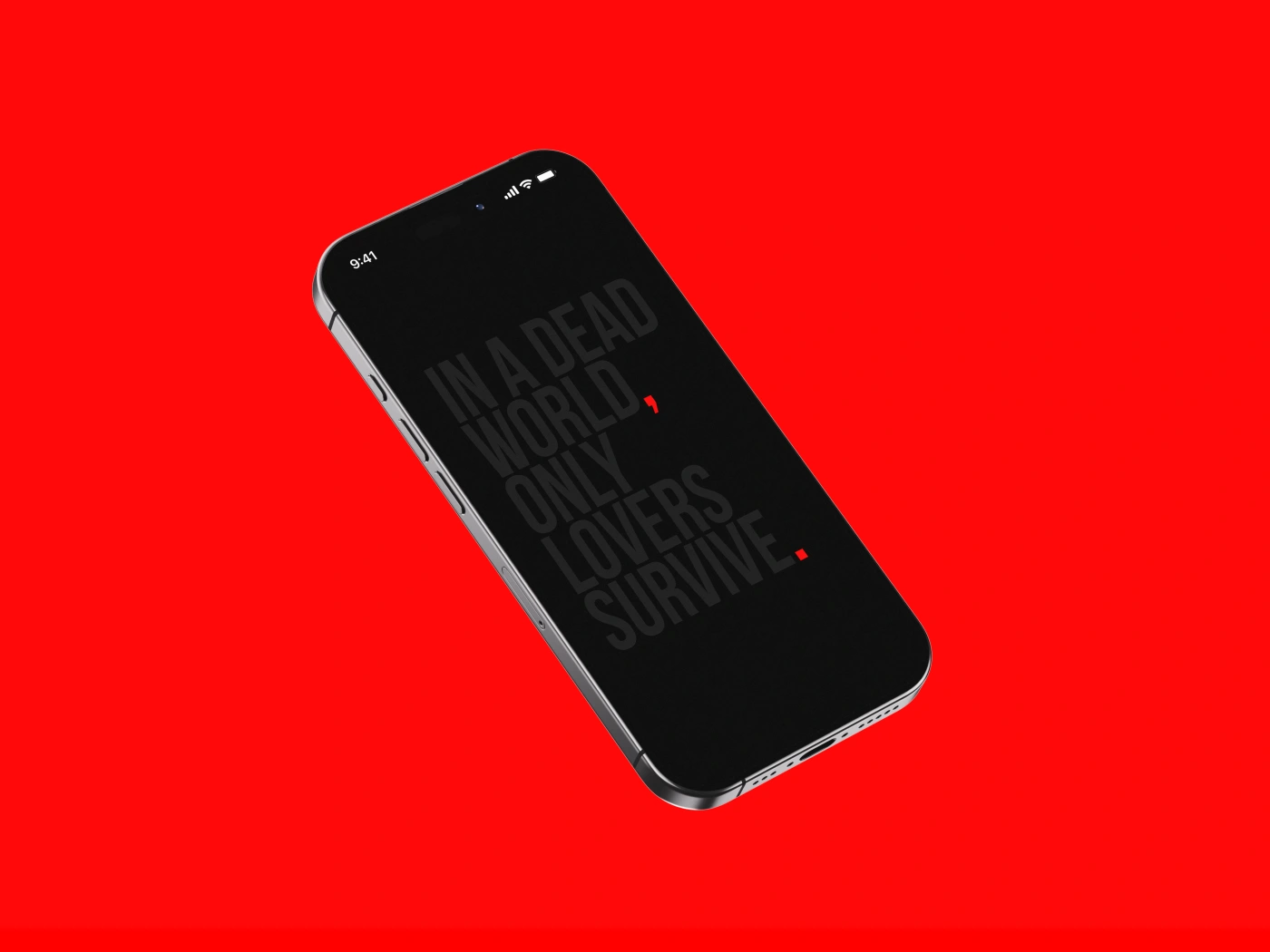
When I made this poster, I was not yet thinking of it as a digital object. I imagined it in physical space. For example, on matte paper, with the letters printed in a slightly glossier layer or made with some kind of embossing. You walk past the wall and suddenly notice that there is something on the poster. You come closer, and the text almost disappears. You look at it slightly from the side, and there it is again.
But it turned out that something similar happens on a screen. Digital space also has its own conditions. Light, brightness, sensors, the behavior of the device, the position of your hand, the time of day. The work begins to live a life of its own in an environment I had not originally accounted for.
I think we need to pay closer attention to how digital devices behave today. A smartphone, a TV screen, a chat with an artificial intelligence, virtual reality glasses. All of these have their own strangeness, their own sensors, their own small glitches and peculiarities.
And the better we notice this, the more precisely we can use this new space. Not just as a medium, but as part of the expression. Even if the meaning is very simple. Like on this poster.